
Artificial intelligence (AI) is no longer a side conversation for Indian pharma. It is fast becoming central to how drugs will be discovered, made, and supplied. Along with that shift comes a sharper focus on innovation, on the one hand, and quality and trust, on the other.

The US Food and Drug Administration's (USFDA)'s new draft guidelines aimed at speeding up and reducing the cost of developing biosimilars - lower-priced, near-replicas of complex biologic medicines - could significantly benefit Indian biotech companies.

Concerns over weakening demand for Indian pharmaceutical (pharma) drugs in the US - their largest export market - have weighed heavily on investor sentiment this year. While the Nifty 50 has gained 6.02 per cent year - to - date (as on September 15), the Nifty Pharma index has declined 5.18 per cent, National Stock Exchange data shows.
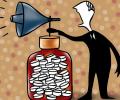
US accounts for a large part of revenue for top Indian pharma companies like Gland Pharma (54 percent), Dr Reddy's (53 per cent), and Aurobindo Pharma (48 per cent).

Since the start of this financial year (FY24), the stock of Aurobindo Pharma has been one of the top pharma gainers, enhancing investor wealth by over 68 per cent, with a third of those gains coming in the last three months. The stock is riding on multiple triggers given its investments in the production-linked incentive or PLI scheme, biosimilars, injectables and vaccines, which should drive revenues and profits over the medium term. Better than expected performance after the June quarter results led to a revision of earnings estimates for FY24 and FY25.

Indian drugmakers supply 47 per cent of the generic medicine requirements in the US, and tariffs would have increased prices in the US domestic market for patients, who are already dealing with drug shortages.

Drug shortages in the US are at an all-time high, and price erosion has stabilised, which could benefit Indian pharmaceutical (pharma) companies with a US focus, according to analysts. Nuvama Research analysts said that US price erosion seems to have normalised to its old levels of 6-8 per cent and volumes are picking up with easing of inventory. Similarly, an ICICIdirect analyst noted: "Price erosion intensity has now moderated to a single digit and is expected to tone down a

Industry insiders in India warn that any such move in the pharmaceutical sector could be counterproductive for the US as it may face increased drug shortages if tariffs are imposed on such imports.

Domestic firms Aurobindo Pharma, Glenmark Pharmaceuticals and Natco Pharma have received US health regulator's approval to market their generic Rizatriptan Benzoate orally disintegrating tablets used for treating migraine in the American market.

The focus of the company would be to develop its capability across segments of injectables, vaccines, biosimilars, inhalation and APIs to drive growth.

Pfizer Inc and its group companies filed a petition in a US court against Aurobindo Pharma Ltd and Dr Reddy's Laboratories alleging that the Indian drug-makers were planning separately to come out with generic versions of its blockbuster multi-billion dollar drug Ibrance (palbociclib) before expiration of its patent.

According to the petition copies, Hospira has alleged that Aurobindo's Abbreviated New Drug Application (ANDA) to make generic version of dexmedetomidine hydrochloride injection would infringe its patented drug Precedex.

US-based pharma giants Eli Lilly and company has filed a case against two Indian drug makers, Aurobindo Pharma and Lupin alleging infringement of patent of its anti-depressant drug Cymbalta.
Billed as the largest private placement by any pharmaceutical company in India, Hyderabad-based Auribindo Pharma would be issuing 38 lakh preferential shares with a premium of Rs 594 per share to net Rs 229.52 crore.
Aurobindo Pharma on Thursday said it had received US FDA approval for anti-retroviral Lamivudine, thus enabling it to participate in the president's emergency plan for AIDS relief), a US government initiative.

Analysts are expecting pharmaceutical companies to post sales growth of 10-11 per cent in the second quarter this financial year while the Ebitda (earnings before interest, tax, depreciation, and amortisation) margins are anticipated to improve by about 110 basis points. Ebitda improvement will be led by lower input costs because prices of active pharmaceutical ingredients (APIs) are 5-15 per cent lower year-on-year (Y-o-Y). Axis Capital said sales growth would be around 10 per cent, of which growth in the India market would be 11 per cent or so.
The tailwind of low price erosion in the US generics market, seen by domestic pharmaceutical companies in calendar year 2023 (CY23), may be reversing slowly, caution analysts. According to the latest data from US-based Centers for Medicare and Medicaid Services (CMMS), price erosion in calendar year 2024 (CY24) on a year-to-date (YTD) basis stood at a high of 15 per cent in the oral solid dosage (OSD) segment compared to a low of 1 per cent in CY23. This erosion, according to a report by Antique Stock Broking, was the highest in the last three years.

Ahmedabad-based Zydus Cadila, Bharat Biotech's intra-nasal candidate are among the candidates who got approval from the expert panel to conduct clinical trials, Sohini Das reports.
Leading drug firms Aurobindo Pharma, Sun Pharma and Jubilant are recalling different products in the US market for various reasons, as per the latest enforcement report by the US Food and Drug Administration (USFDA). While Aurobindo Pharma is recalling Cyanocobalamin Injection, which is used to treat and prevent lack of vitamin B12, Mumbai-based Sun Pharma is recalling a drug used to increase the production of natural tears in eyes. Similarly, Jubilant Cadista is recalling a drug which is used to treat different inflammatory conditions.

A reading of the reports suggests that there is no standard practice for reporting political contributions and it is left to the company's discretion to report them as they find fit.
Hospitals to recover from sluggish Q3; diagnostics' growth rate at pre-Covid levels.

An acute drug shortage in the US and stable pricing along with product launches are likely to boost revenues of India's pharmaceutical companies during the first quarter of this financial year, analysts said. Most brokerages estimate a top line growth of around 14-15 per cent, with earnings before interest, taxes, depreciation, and amortisation (Ebitda) growth of 24-30 per cent for Q1 of FY24. Hospitals are, however, likely to report lower occupancy rates, and diagnostics companies may witness an impact from delayed monsoon.
The BSE Healthcare Index is up 19 per cent as compared to BSE Sensex returns of 11 per cent during this period. Nitin Agarwal of DAM Capital highlighted this trend in a report last month. "After a sustained period of underperformance over FY21-23, the BSE Healthcare Index has once again captured the spotlight. "The recent uptick in performance has been driven by hospitals and emerging green shoots in pharmaceutical exports, particularly to the US, along with sustaining momentum in domestic branded formulations," he said.

The index is currently trading at 149 per cent of its historical P/B valuation, surpassing its previous peak of 125 per cent made in 2020-21.
Indian drug firms like Marksans Pharma, Aurobindo Pharma, Zydus and Jubilant are recalling products in the US market, as per the latest enforcement report by the US Food and Drug Administration (USFDA). While Marksans Pharma is recalling diabetes drug, Zydus Pharmaceuticals (USA) is recalling drug which is used to reduce stomach acid. Similarly, Aurobindo Pharma (USA) is recalling pain relieving drug, while Jubilant Cadista is recalling a medication used to treat schizophrenia.
The government should take measures to promote innovation and R&D while simplifying regulations for the sector in the upcoming Union Budget, as per pharmaceutical industry bodies. Outlining the wish list for the sector in the upcoming Union Budget, Indian Pharmaceutical Alliance (IPA) secretary general Sudarshan Jain said the domestic pharma industry is currently around $50 billion in size and aspires to grow to around $130 billion by 2030 and $450 billion by 2047. "To achieve this vision, the Union Budget 2023-2024 should help fuel innovation and R&D, which will set the pace for propelling the pharmaceutical industry forward," he told PTI.
Reinvent and innovate will be the key mantra for the Indian pharma industry in the New Year as the 'pharmacy of the world' looks to move from volume to value leadership, amid emerging challenges of inflation and pricing pressures in the global markets. While R&D investment, market competitiveness, regulatory scrutiny, and domestic price regulations are expected to shape the growth of generics and injectable products, concerns such as price control and customs duties on medical equipment will continue to bother the healthcare industry in 2023. The industry believes that in view of India's G20 Presidency, digital health innovation, achieving universal health coverage, improving healthcare infrastructure and delivery will continue to be the key driving factors in 2023.

Even as most of its large-cap pharmaceutical peers have struggled to stay above water on the returns front, Zydus Lifesciences has been one of the big outperformers within the sector over the past year with a return of over 30 per cent. The gains have come on the back of multiple triggers such as the scaling up of new product launches in the US market, clearance for its Moraiya (Gujarat) facility and steady performance in the domestic market. Though it has been the top pharma gainer in the 2022-23 financial year (FY23), brokerages continue to maintain their 'buy' stance, given the strong visibility in the US market.

Sentiment also remained buoyant as a good monsoon season lifted hopes of a revival in farm output.
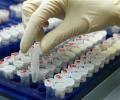
Researchers at Northwell Health in New York are testing the effects on Famotidine (used in high intravenous doses) on Covid-19 patients as a potential treatment. After the hospital announced its clinical trials, it led to a drug shortage in the US. Back home, however, there has not been any surge in the demand for Famotidine yet.

Better-than-expected financial results in Q3 due to higher revenue growth and margins in key markets fuel the rally
These include former drugs controller M Venkateshwarlu, Ranbaxy CMD Malvinder Mohan Singh, Ranjit Shahani, India chief of Swiss pharma major Novartis AG, Ramaprasad Reddy, chairman Aurobindo Pharma and Rajesh Jain, joint managing director, Panacea Biotec.

Companies run till now by mostly their promoters are increasingly inducting professionals to head their teams.

Drugmaker Aurobindo Pharma on Monday said it has entered into licensing and supply agreements with London-based pharmaceutical giant AstraZeneca to supply several solid dosage and sterile products for emerging markets.

The anti-depressant drug market in the US is primarily ruled by Effexor XR (Venlafaxine) of Wyeth (now owned by Pfizer).

The growth was led by family-owned companies and business groups with presence in pharmaceuticals, information technology services, and consumer products.
The rupee's appreciation of 6.4 per cent against the dollar and 12 per cent against the euro is likely to hurt the first-quarter performance of the pharmaceutical sector, indicate a results' preview by broking houses.

But the newer entrants prove nimbler than the slowing pioneers.
With all major US export-oriented drug manufacturing plants in the country up for inspection in 2022, some estimates peg that at least 20-30 per cent of the new product launches lined up for the US will be subject to on-site inspection by the US Food and Drug Administration (USFDA). The last two years saw limited physical inspections due to travel restrictions during the pandemic. "Pre-Covid, the frequency and number of inspections of manufacturing plants in India by USFDA had increased significantly," analysts from ICICI Securities Research noted. "With growing ANDA filings, especially for complex products. "We expect this trend to return with the environment normalising," analysts from ICICI Securities Research noted.
 © 2026 Rediff.com - Advertise with us - Disclaimer - Privacy Policy - Sitemap - Feedback - About us - Terms of use - Grievances